


Food allergies don’t stay home just because you’re on vacation. Mike is allergic to strawberries, and I’m allergic to shellfish and cauliflower, so eating safely is something we think about every time we cruise.
The good news? After sailing with Carnival, we’ve learned that having food allergies doesn’t mean spending your vacation worried about every meal. A little preparation, clear communication with the dining team, and knowing what questions to ask can make a huge difference.
In this guide, I’m sharing what we’ve learned from actually cruising with food allergies—including how we communicate with the crew, the allergy cards we use, and what you should know before you sit down to eat.
Understanding Carnival’s Approach to Special Dietary Needs
Carnival accommodates a variety of dietary needs, including food allergies, gluten-free, dairy-free, vegetarian, vegan, kosher and other special diets. But when you’re dealing with an actual food allergy, communication matters.
We’ve found that the best approach is to be specific about the allergy rather than simply asking whether something is “safe.” Tell the dining team exactly what you’re allergic to and ask questions when you’re unsure about a dish.
And don’t assume something that works for one dietary restriction will work for another. A gluten-free option, for example, may contain an ingredient that’s an allergen for someone else—something I’ve learned firsthand with my cauliflower allergy.
Before you cruise: Plan for Your Food Allergies
A little preparation before your cruise can make dining onboard much easier. Before we sail, we make sure we know exactly how we’re going to communicate our allergies—and we bring allergy cards that clearly list the foods we need to avoid.
Once onboard, don’t assume the dining team already knows about your allergy. Tell your server or dining team specifically what you’re allergic to, even if you’ve mentioned it previously or noted it elsewhere.
If you have a severe allergy, bring any prescribed emergency medication with you and keep it accessible. Carnival advises guests with a history of anaphylaxis to have their EpiPen with them.
Meeting the Head Waiter: Your Secret Weapon
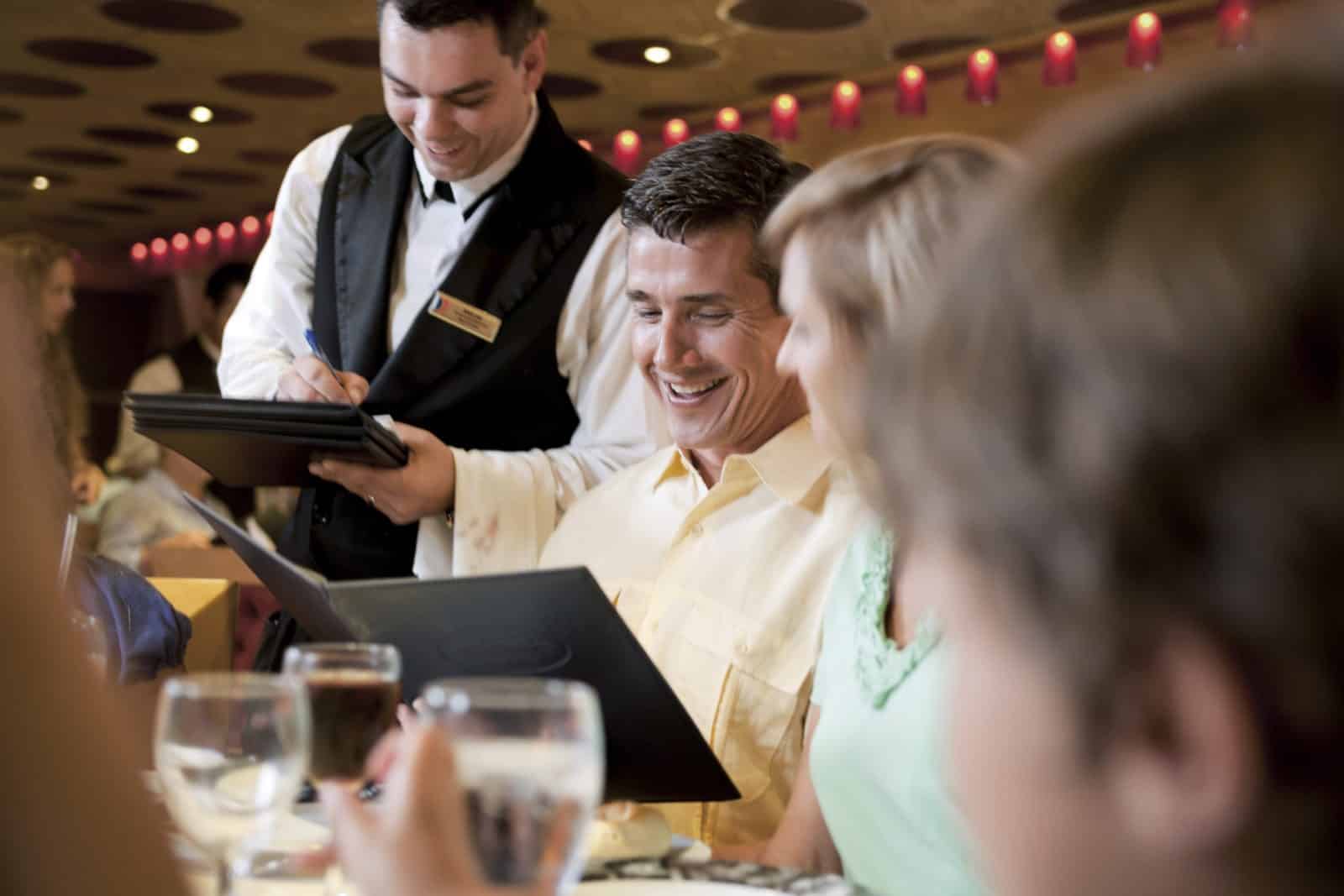
One of the best things we do when we board is talk with our dining team about our food allergies. We’re specific: Mike is allergic to strawberries, and I’m allergic to shellfish and cauliflower.
If you have traditional dining, you’ll generally have the same dining team each evening, which can make those conversations easier. With flexible dining, don’t assume a new server already knows about your allergies—tell them again.
We also ask questions. If I’m unsure about a sauce, garnish or ingredient, I’d rather ask than guess. And if something arrives that doesn’t look right, I speak up.
Having food allergies doesn’t mean you can’t enjoy dinner on a cruise. For us, it simply means making communication with the dining team part of the routine.
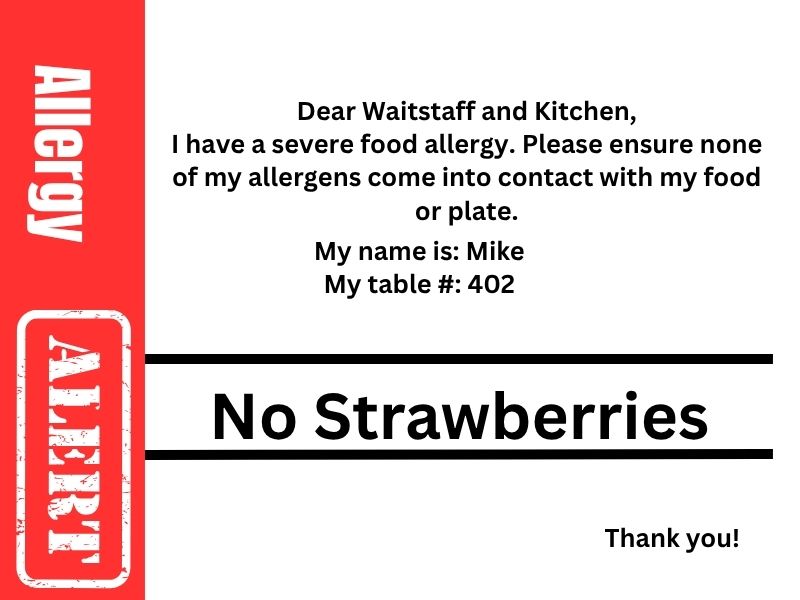
One of the simplest things we bring with us is an allergy card. Mike’s lists his strawberry allergy, while mine lists shellfish and cauliflower. It takes seconds to hand the card to a member of the dining team, and there’s no question about which foods we need to avoid.
I still tell our server about our allergies—the card isn’t a replacement for that conversation. Think of it as an extra communication tool, especially when the dining room is busy or when you’re eating somewhere new onboard.
I created our cards in Canva, and you can easily make your own with your specific allergies. Keep the wording simple, make the allergen easy to see, and consider bringing several copies in case one disappears during the trip.
Want to make your own? I created a simple allergy card template in Canva that you can customize with your own information.
Using Menu Mate With Food Allergies
Carnival uses Menu Mate to help guests with food allergies and other dietary needs identify menu options that may work for them. Dining staff can use the system to review ingredients and help you navigate available choices.
We still tell our dining team about our allergies every time we eat somewhere new. Technology is helpful, but I don’t treat it as a replacement for talking with the people preparing and serving our food.
If you’re unsure about a dish, ask. With less common allergies—like my cauliflower allergy—I’m especially careful about ingredients that may not be obvious.

Not Every Allergen is Obvious
My cauliflower allergy sounds like it should be pretty easy to manage. Just don’t eat cauliflower, right? Unfortunately, it’s not always that obvious.
Cauliflower has become a popular substitute in gluten-free and lower-carb foods. I’ve actually bought frozen meals at home only to discover later that they contained cauliflower—and ended up giving them away.
That experience taught me not to assume that something labeled “gluten-free” or made for another dietary need is automatically safe for my allergies. On a cruise, I still ask what’s actually in a dish, especially when an ingredient isn’t obvious.
The same goes for my shellfish allergy. Sauces, broths and other ingredients may not be apparent just from looking at the finished dish. When in doubt, I ask.
Dairy- Free and Lactose Intolerant Options
If you avoid dairy or are lactose intolerant, let your dining team know rather than relying only on the menu description. They can help you identify options that meet your needs and answer questions about ingredients or possible substitutions.
Remember that lactose intolerance, a milk allergy and choosing to eat dairy-free aren’t the same thing. Be specific about what you need to avoid when talking with the dining staff.
Vegan and Vegetarian Choices
Carnival offers vegetarian options throughout the ship, and vegan choices are also available. If you follow a vegan diet, let your dining team know so they can help you identify appropriate dishes and discuss possible modifications.
One important reminder if you also have a food allergy: vegetarian or vegan doesn’t automatically mean allergen-free. Ingredients such as nuts, soy, wheat or other allergens may still be present, so always communicate your specific allergy rather than relying on the dietary label alone.
Kosher Meals Require Advanced Planning
If you keep Kosher, this is one dietary need you definitely want to arrange before you sail. Carnival offers a limited selection of frozen Glatt Kosher entrées, but its onboard kitchens are not Kosher and the culinary team does not prepare these meals onboard.
Carnival currently requires Kosher entrée requests at least 3 weeks before domestic cruises and 8 weeks before cruises in Europe or Australia. Once onboard, you’ll need to see the hostess in the main restaurant to arrange your pre-packaged meals. Carnival Help
Carnival also allows guests to arrange certain pre-packaged Kosher meals from a certified vendor, but there are specific requirements, so this is one situation where I would contact Carnival well before your cruise rather than waiting until you’re onboard.
Nut Allergies and Cross-Contact
Nut allergies require extra care because nuts may appear in desserts, sauces, baked goods and other dishes where they aren’t always obvious. If you have a nut allergy, tell your dining team specifically which nuts you need to avoid rather than simply asking whether something is “nut-free.”
Cross-contact can also be a concern when foods are prepared or served in shared areas. Talk with the dining staff about your allergy and ask questions about preparation whenever you’re unsure.
Special Menus in the Main Dining Room
The Main Dining Room is one of our favorite places to eat when managing food allergies because we can talk directly with our dining team and ask questions about the menu.
Depending on your dietary needs, the staff can help you identify dishes that may work for you and discuss available alternatives or modifications. Be specific about your allergy rather than simply asking for a “special diet” menu.
We’ve found that having those conversations early—and continuing to communicate throughout the cruise—makes dining much easier.
You might also enjoy 9+ Dining Room Tips Every Cruiser Should Know
Eating in the Buffet With Food Allergies
The buffet gives you plenty of choices, but food allergies can make it a little more complicated. Even when a dish looks straightforward, ingredients may not be obvious, and shared serving areas can create additional concerns about allergen cross-contact.
Rather than guessing, ask a member of the dining team for help. This is also where we’ve seen Carnival’s Menu Mate station in use, helping guests identify options based on their dietary needs.
And remember: the little signs above the food can be helpful, but they aren’t a substitute for asking questions when you have an allergy.
Want a closer look at what you’ll find at Carnival’s buffet? Check out my complete guide to the Lido Marketplace for more photos, food options and tips for eating there.
Room Service With Food Allergies
We don’t use room service very often—unless we’re craving cookies or something sweet before bed. But if you do order room service, the same food-allergy rules apply.
Don’t assume that a simple-looking item is automatically safe. Let the staff know about your allergy when ordering and ask about ingredients if you’re unsure.
Menus and availability can change, so check the current room service menu once you’re onboard.
Eating at Speciality Restaurants
Specialty restaurants are one of our favorite parts of cruising, and having food allergies doesn’t mean we skip them. But our allergies do affect some of the dining experiences we choose.
For example, we’ve never booked the Chef’s Table. Shellfish is often part of the special multi-course menu, and with my shellfish allergy, it’s an experience I’ve chosen to skip. We’ve also avoided communal specialty dining experiences, such as teppanyaki, where several foods are prepared together on the same cooking surface.
We have eaten at Mongolian Wok on many of the older ships, where the crew has been very accommodating with my shellfish allergy. When I explain my allergy, they’ve gotten a clean pan and utensils and cleaned the cooking area before preparing my food. It takes a little extra time—and I’m pretty sure the people waiting in line behind us aren’t always thrilled about that—but I’d rather hold up the line for a few minutes than take a chance with an allergen.
For the specialty restaurants we do visit, we never assume that information we shared elsewhere onboard has automatically followed us. We tell our server again—Mike is allergic to strawberries, and I’m allergic to shellfish and cauliflower—and ask questions about anything we’re unsure of.
Having food allergies doesn’t mean saying no to specialty dining. For us, it means choosing the experiences we’re comfortable with and communicating our allergies every time we try somewhere new.
Bring Allergy-Safe Snacks for Port Days
One thing I recommend when cruising with food allergies is bringing a few prepackaged snacks you already know are safe for you. They can be especially helpful on excursion and port days, when you may not know what food will be available.
This becomes even more important when you’re visiting a country where you don’t speak or read the language. Trying to explain a food allergy—or read an ingredient label in another language—can be difficult. Having something familiar in your bag can carry you through a few hours until you’re back somewhere you feel comfortable eating.
Just remember that every destination has its own rules about bringing food ashore. Keep snacks commercially packaged and sealed, and check the rules for the ports you’re visiting before taking food off the ship.
Final Thoughts and Reminders
Cruising with food allergies takes a little more planning, but it hasn’t stopped us from enjoying the food—or trying new restaurants—when we cruise.
Mike’s strawberry allergy and my shellfish and cauliflower allergies each come with different challenges. We’ve learned to speak up, ask questions, carry our allergy cards and never assume that something is safe simply because it looks safe.
We also make choices based on what we’re comfortable with. I’ll happily wait while the crew cleans a pan at Mongolian Wok, but I’ve chosen to skip experiences like the Chef’s Table and communal specialty dining. That’s what works for me. Someone else with the same allergy may make a different choice.
Most importantly, don’t be embarrassed about asking questions or taking a little extra time. The people waiting behind you might survive an extra few minutes. 😉 Your health is more important than keeping the line moving.
With some preparation and good communication, food allergies can simply become another part of how you cruise—not the thing that defines your vacation.
Planning a Carnival Cruise?
Food allergies don’t have to keep you from enjoying the experience. A little preparation and clear communication can go a long way.
Cruising Carnival With Food Allergies FAQs
Do I need to notify Carnival about my food allergy before my cruise?
For most food allergies, you can discuss your needs with the dining team once onboard. I still recommend planning ahead, especially if your allergy is severe. Bring any prescribed emergency medication and an allergy card listing exactly what you need to avoid. Once onboard, tell your dining team about your allergy rather than assuming it has already been communicated to them.
Some special dietary needs, such as Kosher meals, require advance arrangements, so check Carnival’s current guidelines before you sail.
What should I do when I first board Carnival with a food allergy?
Make talking with your dining team one of your first-day priorities. Tell them exactly what you’re allergic to and ask how they recommend handling meals during your cruise.We also carry allergy cards listing our specific allergens. They don’t replace the conversation, but they make it easy to clearly communicate what Mike and I need to avoid.
Can Carnival accommodate food allergies in the Main Dining Room?
In our experience, yes. The Main Dining Room is actually one of the places we feel most comfortable eating because we can communicate directly with the dining team about our allergies.
Tell your server exactly what you need to avoid and ask questions about ingredients or preparation when necessary. We never assume the staff already knows about our allergies, even if we’ve discussed them previously.
Can I eat at the buffet if I have food allergies?
We do, but we’re more cautious at the buffet because ingredients aren’t always obvious and shared serving areas can create concerns about allergen cross-contact.
Rather than guessing, ask a member of the dining team for help. We’ve also used Carnival’s Menu Mate near the buffet to help identify options based on our dietary needs.
How does Carnival’s Menu Mate help with food allergies?
Menu Mate can help guests with food allergies and other dietary needs identify menu options based on specific restrictions. Dining staff can use it to review ingredients and help you navigate your choices.
We still tell the dining team about our allergies and ask questions when we’re unsure. Menu Mate is a helpful tool, but we don’t use it as a replacement for communicating with the crew.
Can I eat at specialty restaurants with a food allergy?
We do, but we treat each specialty restaurant as a new conversation about our allergies. We tell our server exactly what we need to avoid and ask questions about ingredients and preparation.
Our allergies also influence which experiences we choose. For example, I’ve skipped the Chef’s Table and communal dining experiences such as teppanyaki because of my shellfish allergy. Choose the dining experiences you’re comfortable with and always communicate your specific needs.
Should I bring my own allergy-safe snacks on a Carnival cruise?
We like to bring a few prepackaged snacks that we already know are safe for us, especially for port and excursion days. They’re helpful when food choices are limited or when we don’t speak or read the local language well enough to confidently check ingredients.
Before taking food off the ship, check the rules for that destination. Some ports restrict what foods can be brought ashore, even if they’re packaged.